

How Proper Roof Drainage and Flashing Protect Lodi Homes from Seasonal Storms
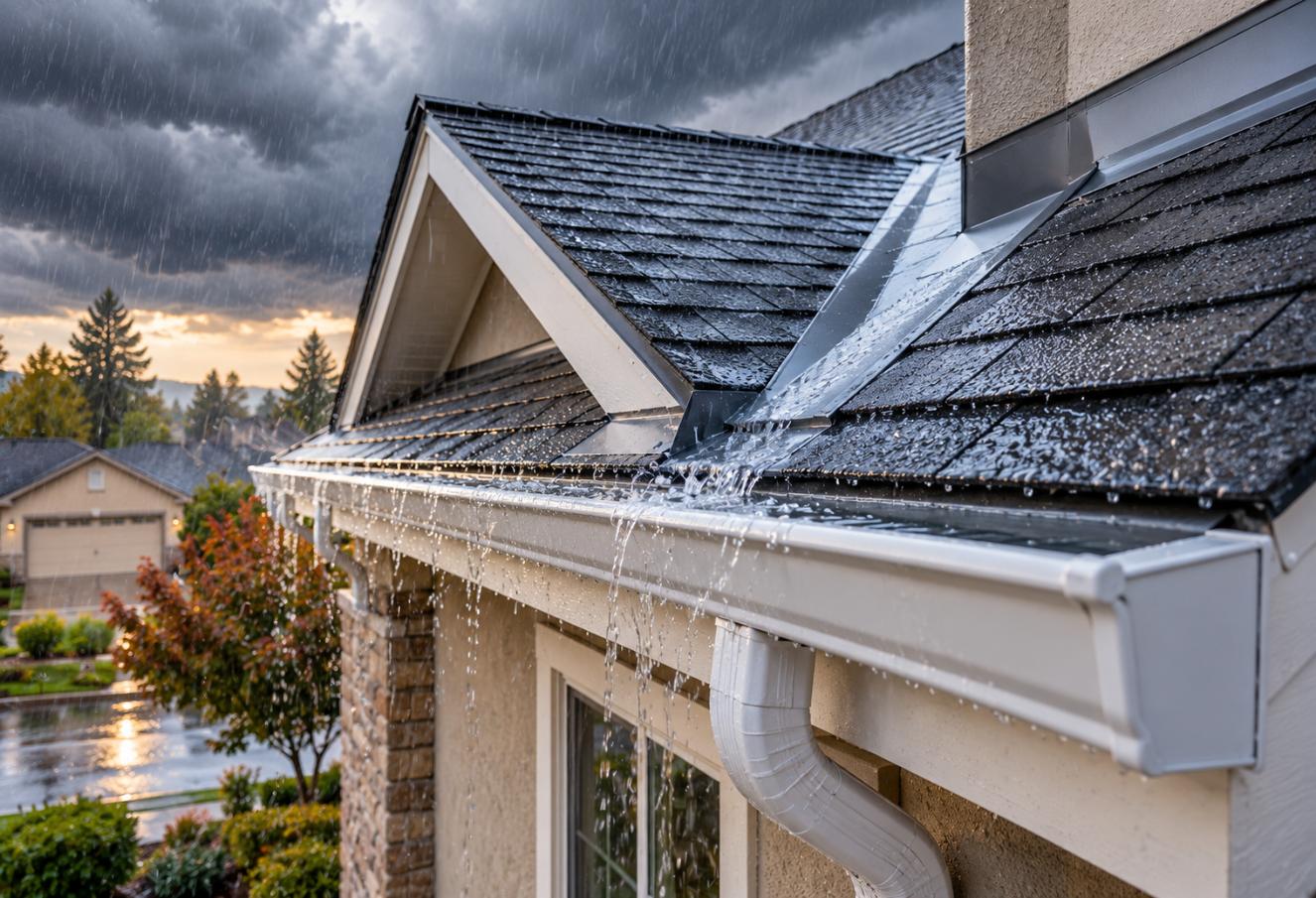
A roof can look perfectly sound during Lodi’s long dry stretches and still develop problems once seasonal rain arrives. Gutters that cannot move water efficiently, clogged downspouts, and worn flashing around roof penetrations can turn a storm into leaks, staining, damaged sheathing, or water collecting where it should not.
Quick answer: Proper roof drainage carries rainwater off the roof and away from vulnerable areas, while flashing helps keep water from entering at roof joints, edges, valleys, chimneys, vents, and other transitions. For Lodi homeowners, checking both systems before the wetter part of the year can help identify small problems before repeated storms expose them.
What local homeowners should know
-
Gutters and downspouts need a clear path so stormwater can leave the roof instead of backing up along roof edges.
-
The City of Lodi specifically recommends clearing gutters and drains and checking roofs and flashing when preparing a home for major rain events.
-
Leaves and other debris can obstruct drainage, especially around properties with mature trees.
-
Flashing problems may remain unnoticed during dry weather and become apparent only after sustained or wind-driven rain.
-
Roof drainage should direct water away from the building rather than allowing it to collect near walls and the foundation.
Why Roof Drainage and Flashing Matter in Lodi
Roof drainage and flashing matter in Lodi because seasonal rain places two related demands on a roofing system: water must move off the roof efficiently, and vulnerable roof transitions must remain watertight while that happens. A problem with either function can increase the chance of moisture reaching materials beneath the finished roof surface.
Local stormwater management makes drainage especially relevant. The City of Lodi explains that runoff from streets eventually reaches destinations including the Mokelumne River, Lodi Lake, and Woodbridge Irrigation District canals. The city also warns that leaves can plug drain inlets and contribute to localized flooding.
At Gonzalez Roofing, we look at roof drainage and flashing as connected parts of the same water-management system. A roof needs more than intact shingles or tiles. Water also needs a controlled route from the roof surface to the ground.
Local Storm Preparation Starts at the Roof
Local storm preparation should include cleaning gutters and downspouts, checking visible roofing materials, and inspecting flashing before heavy rain exposes weak areas. The City of Lodi specifically advises residents to remove leaves, dirt, and debris from gutters and downspouts and repair loose roofing materials or flashing that could allow water intrusion.
That advice is particularly useful after months of dry weather. Debris can accumulate without causing an obvious problem until the first significant rainfall.
Properties near established residential areas, Lodi Lake, the Mokelumne River corridor, and tree-lined streets may need particular attention to leaves and organic debris. Homeowners elsewhere in San Joaquin County can face the same basic issue: a drainage system works only when water has an unobstructed path.
Warning Signs of Roof Drainage or Flashing Problems
Warning signs of drainage or flashing trouble include overflowing gutters, water stains, loose metal components, debris buildup, and leaks that appear near roof transitions after rain. Catching these symptoms early gives homeowners an opportunity to investigate the source instead of waiting for another storm to make the problem more severe.
Watch for:
-
Water spilling over gutter edges during rainfall
-
Gutters pulling away from the fascia or visibly sagging
-
Downspouts that release little water despite steady rain
-
Leaves, twigs, roof granules, or other material filling gutters
-
Interior stains near chimneys, vents, skylights, or exterior walls
-
Loose, bent, rusted, or displaced flashing
-
Dampness or staining in an attic after a storm
-
Water collecting near the home after leaving a downspout
Interior staining does not automatically identify the exact entry point. Water can travel along roof decking, framing, or other materials before becoming visible indoors.
Common Causes Around Lodi Homes
Common causes around Lodi homes include clogged drainage paths, aging sealants, displaced flashing, deteriorated roofing materials, and drainage components that no longer direct water effectively. Seasonal storms often reveal these conditions because water finds openings and low points that may cause no noticeable symptoms during dry weather.
Debris buildup: Leaves and organic material can slow gutter flow and obstruct downspouts.
Flashing deterioration: Flashing around vents, chimneys, walls, valleys, and other transitions can loosen, corrode, or separate over time.
Roof wear: Cracked, missing, slipped, or deteriorated roofing materials can expose the layers underneath.
Poor drainage direction: Even when gutters work properly, downspouts that release water beside the structure can contribute to unwanted water accumulation.
Previous patching: Short-term repairs may not address the underlying drainage path or the actual location where water enters.
Prevention and Seasonal Roof Maintenance
Preventive roof maintenance in Lodi should focus on keeping drainage paths clear and checking vulnerable roof details before the rainy season and after significant storms. Homeowners can safely perform some observations from ground level, but climbing onto a wet, steep, damaged, or unfamiliar roof should be left to a roofing professional.
From the ground, check whether gutters appear packed with debris, downspouts are disconnected, or water is spilling in unusual locations during rain. After a storm, look inside accessible attic areas for new staining or dampness without touching wet electrical components.
Trees near the roof can also make debris checks more important. Keeping gutters and nearby storm drain areas clear supports both household drainage and Lodi’s broader stormwater system.
When to Call a Roofing Professional
A roofing professional should inspect the system when there is an active leak, recurring interior staining, damaged flashing, loose roofing material, persistent gutter overflow, or a drainage problem that cannot be safely evaluated from the ground. Professional inspection is also appropriate when the source of water intrusion is unclear.
We can evaluate how roofing materials, flashing, valleys, penetrations, edges, gutters, and other drainage details are interacting rather than assuming the first visible symptom is the cause.
Some larger roofing projects may also involve permit requirements. San Joaquin County states that roofing work such as roof replacement, overlays, and roof conversions requires a permit in the county’s jurisdiction. Requirements can vary by project and location, so property owners should confirm the rules that apply to their address before substantial work begins.
Common Mistakes Homeowners Should Avoid
The most common mistakes are treating the visible leak instead of its source, ignoring gutter problems, and attempting unsafe roof work during or immediately after a storm. A better approach is to evaluate how water is reaching, crossing, and leaving the roof before deciding what repair is appropriate.
Mistake: Sealing the first suspicious spot.
Consequence: The actual entry point may remain open.
Better approach: Trace the water path and inspect nearby flashing and roofing details.
Mistake: Waiting until gutters overflow repeatedly.
Consequence: Water may remain concentrated along roof edges or discharge where it is not intended.
Better approach: Clear debris before the wetter season and investigate recurring overflow.
Mistake: Walking on a wet roof to find a leak.
Consequence: Wet roofing surfaces create a serious fall hazard and can sometimes be damaged by foot traffic.
Better approach: Make observations from a safe location and arrange professional inspection when roof access is necessary.
A Common Local Storm Scenario
A common Lodi scenario begins with months of little obvious roof trouble, followed by a seasonal storm that suddenly produces a ceiling stain or overflowing gutter. The storm may not have created the entire problem. Instead, rainfall can reveal debris buildup, deteriorated flashing, or roofing wear that developed gradually during the preceding dry period.
For example, leaves may restrict a gutter while a nearby flashing detail has also begun to deteriorate. Once rain arrives, water moves more slowly through the drainage system and repeatedly reaches that vulnerable area.
The right solution depends on what an inspection finds. Cleaning may solve a simple obstruction, while damaged flashing or roofing materials may require repair.
Comparing Maintenance, Repair, and Replacement
Maintenance is appropriate for routine debris and drainage upkeep, repair addresses localized defects, and replacement becomes relevant when deterioration is too widespread for isolated fixes to be practical. The correct option depends on the roof’s condition, the extent of damage, and whether the underlying water-management details remain serviceable.
Routine gutter cleaning cannot repair failed flashing. Likewise, replacing one flashing component will not solve a drainage system that continually backs up.
We focus on identifying the condition responsible for the problem so homeowners can understand whether maintenance, targeted repair, or more extensive roofing work fits what is actually happening.
Service Areas
Our roofing services support homeowners in Lodi and surrounding communities where seasonal rainfall can expose drainage and flashing problems. We can also help property owners in nearby parts of San Joaquin County evaluate roof conditions and prepare for wet weather.
Local conditions can vary by property, roof design, surrounding trees, and drainage layout, so an on-site evaluation provides more useful information than a one-size-fits-all recommendation.
The Cost of Ignoring Drainage and Flashing Problems
Ignoring a drainage or flashing problem can allow repeated water exposure to affect more than the visible roof surface. Depending on where water travels, delayed repairs may contribute to deterioration of roof decking, fascia, insulation, ceilings, wall finishes, or other building materials.
The practical concern is repeated exposure. A minor opening that admits a small amount of water during one storm may continue to admit moisture during later storms.
Addressing the source earlier can reduce the chance that a localized roofing problem becomes a larger water-damage repair.
Frequently Asked Questions About Roof Drainage and Flashing
How often should Lodi homeowners check their gutters?
Lodi homeowners should check gutters before the wetter season and after storms or periods that deposit significant leaves and debris. Homes surrounded by mature trees may need more frequent attention. The goal is to maintain a clear path through the gutter and downspout so roof runoff can leave the system without overflowing.
Why does my gutter overflow during heavy rain?
Gutter overflow can result from debris, blocked downspouts, improper drainage, damaged components, or water arriving faster than the existing system can handle. In Lodi, the City specifically recommends clearing leaves, dirt, and debris before major rain events. Recurring overflow deserves closer evaluation rather than repeated temporary cleanup.
Where is roof flashing normally installed?
Roof flashing is generally used where water needs extra protection at joints, transitions, penetrations, and edges. Depending on the roof, that can include chimneys, vents, walls, valleys, skylights, and other details. The exact flashing configuration varies by roofing system, so damaged areas should be evaluated in context.
Can clogged gutters cause a roof leak?
Clogged gutters can contribute to water-management problems by preventing runoff from leaving the roof edge as intended. Whether a clog directly causes a particular leak depends on the roof and gutter configuration. If a Lodi home has both gutter overflow and interior moisture, the entire drainage and roofing area should be evaluated.
Should I inspect my Lodi roof after every storm?
A ground-level check after significant storms is a practical way to spot obvious changes without taking unnecessary risks. Look for displaced roofing materials, overflowing gutters, fallen branches, unusual debris, or new interior staining. Avoid climbing onto wet roofing. Suspected damage or active leaks should be evaluated by a professional.
Does Lodi recommend cleaning gutters before storms?
Yes. The City of Lodi’s storm-preparedness guidance recommends inspecting and cleaning gutters and downspouts so water can flow freely. The city also advises residents to check roofs and flashing and clear drains and storm drains when preparing for major rain events.
Can I repair roof flashing myself?
Minor visual checks can be made safely from the ground, but flashing repair often requires roof access and correct integration with surrounding roofing materials. Improper sealing can hide rather than solve the water-entry point. If flashing is loose, deteriorated, or associated with an active leak, professional evaluation is the safer approach.
Why is drainage important beyond my roof?
Drainage affects how water moves from the roof to the property and ultimately into the local stormwater system. The City of Lodi states that local runoff can drain toward the Mokelumne River, Lodi Lake, and Woodbridge Irrigation District canals. Keeping household drainage paths clear helps manage water where it first leaves the roof.
Protect Your Lodi Home Before the Next Storm
A roof that drains correctly and has sound flashing is better prepared to manage seasonal rain without allowing water into vulnerable areas of the home. Regular observation, timely maintenance, and professional evaluation when warning signs appear can help Lodi homeowners address problems while they are still manageable.
At Gonzalez Roofing, we can inspect roof drainage, flashing, and related roofing components to help determine what your property needs.
Protect Your Roof From Seasonal Water Damage
Get clear information about the condition of your roof and the repairs or maintenance that may be appropriate.